The comments made by Nick Hurd (Minister for Civil Society…??) suggest that something is going wrong at school – pupils are not being stretched and challenged and are lacking in “grit…at a critical time in their lives to prepare them for work”. Maybe it’s not all about A – C grades in Maths and English. According to the CBI, employability now means developing skills beyond literacy and numeracy: they cite people skills, self-reliance, teamwork, resilience, and the ability to communicate well. These are the so-called soft skills that are increasingly important in the modern workplace. In recent survey of employers more than 60% said that they did not feel school or college leavers are developing the self-management skills they need for work.
Many young people, not in the top stream academically, or lacking the ability to excel in other areas like music or sport, will find it hard to project the confidence and communication skills to convince an employer or university of their talents. So many schools (of all types) now obsess over increasing their grades, and so their standing in league tables, that little time is left to help their students to improve their vital personal skills. Arecen
At Prep4 we are asked more and more to help put this right with individual coaching and with a range of confidence building workshops. A Gallup survey taken only this week in the US showed 80% of parents think “soft skills” should be taught in schools.
For more information on how we can help build your child’s interpersonal skills and confidence (plus develop a bit more grit!) email: victoria@prep4online.com
Author Archives: prep4online
A Workshop near you
We have just put together some dates for our autumn workshops.
Autumn and Winter Drama and Public Speaking Workshops 2013 (Sussex)
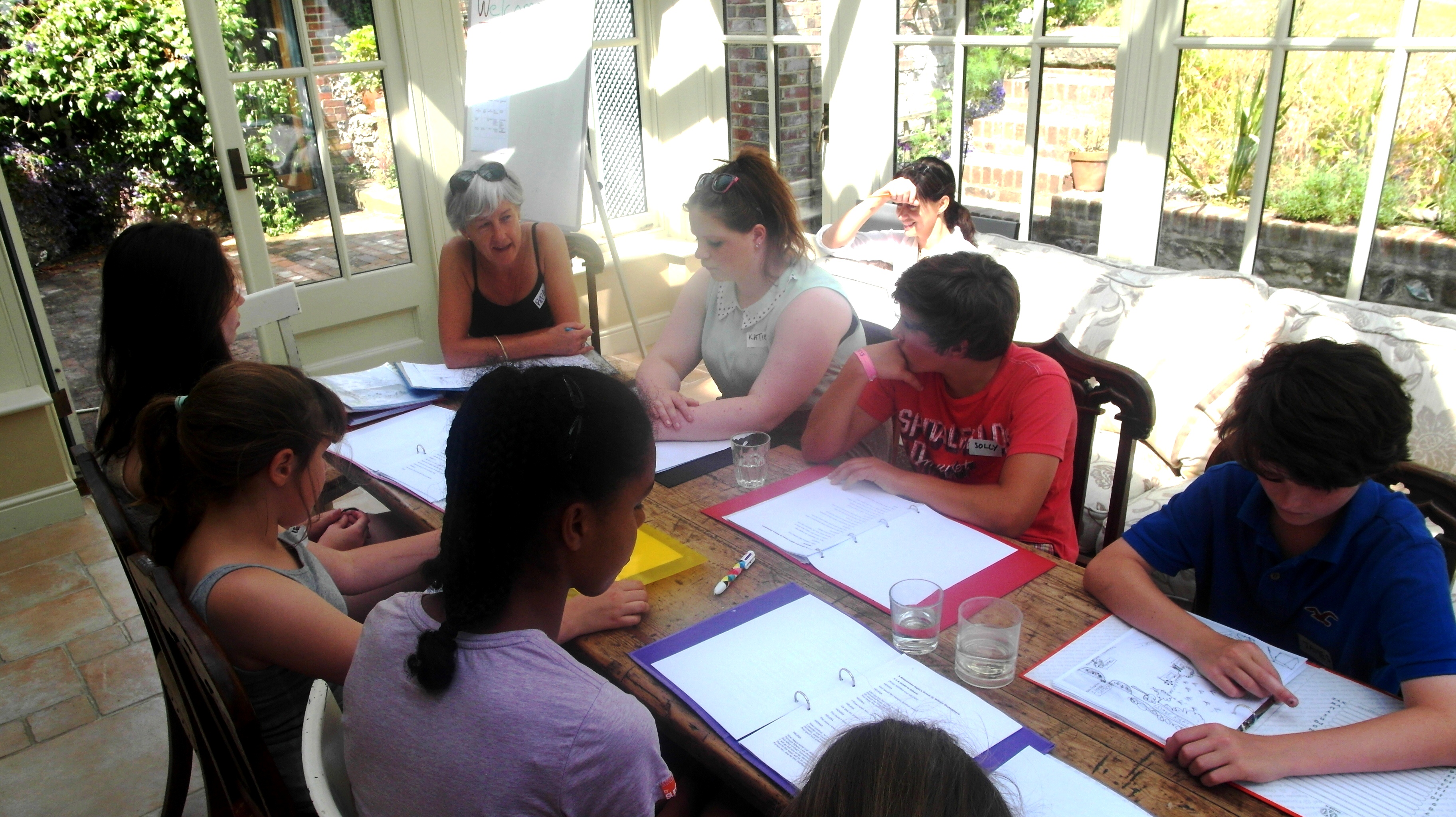
An exciting range of courses run by the Prep4 directors Graham Lee, Victoria Davies Jones and Pippa Cross. Some workshops also include visiting specialists. We usually take a maximum of fifteen students per session. The workshops below are suitable for ages 11 – 14.
Venue: The Old Rectory, Folkington, East Sussex, BN26 5SD
For further details contact us on 07870 800914 or victoria@prep4online.com
Introduction to Comedy: Sunday 29 September 10am – 6pm
Comedian Lee Cornes will work with students on a variety of techniques to develop comedy performance including an introduction to ‘stand-up’, physical comedy, acting and comic timing. The workshop will culminate in a short performance of sketches. £65 (inc. lunch)
Play in a Day: Monday 21 October 10am – 6pm
Students will first work with film producer Pippa Cross to devise/select short pieces, and then choreographer and voice coach, Alison Fielding will work intensively with the aspiring actors to develop characters and movement skills and to improve voice projection. Students will prepare for a short performance. £65 (inc. lunch)
Make the Right Impression at 11/13+: Wednesday 23 October 10am – 5pm
A workshop designed to help students applying to senior schools, with an emphasis on how to impress at first meetings and interview. Students will learn about body language, overcoming nerves and communicating with confidence. Suitable for all candidates, including scholars. The session will include individual practice interviews with oral and written feedback. £60 (inc. lunch)
Speaking in public: Sunday 24 November 10 am – 5pm
A day of presentation training to improve confidence when speaking in public – in class and assemblies etc. Students will be taught voice projection, how to present their opinions effectively and how to banish the “likes” “ums” and “ers”. The day will culminate in a presentation to parents. £60 (inc. lunch)
• GRAHAM LEE is visiting drama and communications specialist at Benenden School. He worked with Theatre Centre and has spent many years coaching children and adults.
• VICTORIA DAVIES JONES is an ex BBC reporter/producer and now teaches communication and presentation skills. She runs the Prep4 interview technique and Oxbridge programmes.
• PIPPA CROSS is a film producer whose latest film, Summer in February was released in June. Other credits include BAFTA nominated Shooting Dogs and Longitude, and teen hit Chalet Girl.
• ALISON FIELDING is an actress and movement coach. She is a member of the Guildhall Drama School auditioning panel.
• LEE CORNES is a comedian and writer whose comedy work includes Blackadder and Mr Bean. Acting credits include Mr Hankin in TV series Grange Hill and Trickster in Dr Who.
Midsummer Workshop 5 days of summer fun and Shakespeare
Prep4′s 2013 Shakespeare workshop was last week was a great success. Our three aims: developing new drama skills; teaching our group to understand, perform and enjoy Shakespeare, and most of all giving everyone a great fun week, were all achieved 100%. The youngsters put on a terrific performance for family and friends at twilight on last Friday evening, the cast astonishing them with a word perfect and otherwise faultless performance of A Midsummer Night’s Dream. Here are some moments to share from our week.
Alison Fielding’s voice movement workshop.
The Mechanicals Practicing voice projection
Mrs Candin’s lovely donkey’s head
Prepare your Daughter for Boarding – Case Studies
“Tuck” by Saskia
As a young 11 year old eager to start boarding school and escape the clutches of my parents, the prospect of a ‘tuck box’ seemed at the time, very alluring. I pictured it stuffed to the rim with chocolate biscuits, skittles, popcorn, and various sorts of fizzy drinks. So when the day finally arrived and it was time to accompany Mum on the weekly food shop to pick up these said items, I was thrilled at the thought of spending an hour or so picking out exactly the sort of sugary muck that I adored. I had always struggled with a very sweet tooth and whilst this had been sensibly controlled by my parents growing up I was now about to start a new adventure away from my parents, arm in arm with what seemed like a treasure chest to me (a huge shiny purple tuck box with my name emblazoned on top). I sat neatly arranging the food in my tuck box the morning before I left for school and I took such pride in being extra careful to place the heavy items at the bottom (biscuits, drinks, mars bars, Golden Syrup etc) and the lighter items (Doritos, bagged candy floss, penny sweets) on top as to ensure nothing would be damaged on the journey up to school. After my parents had dropped me at my new school I noticed that Mum had managed to sneak in some bananas and some raisins, but other than that it was all mine, and as far as I was concerned, I would be able to eat this whenever I wanted. Sure enough within a few days everything had gone and I was surprised one day to find my tuck box completely empty apart from a few leftover packets of polo mints rolling around at the bottom. I would have to wait until my next exeat in a few weeks time to restock my beloved tuck box! I was devastated. As the months at boarding school went on, I was quick to learn that successfully packing a tuck box with the correct items was an art in itself. Fast forward a few years and my tuck box would now consist of;
Marmite (lasts a long time and great for when you’re making toast in the evening. Chocolate spread or Nutella would be an alternative)
Small bottles of water (really handy to carry around to lessons and to take to bed. Obviously these are easily refillable.)
Cereal bars (slightly healthier upgrade to chocolate bars, and perfect for taking to a sports session or for a quick snack in between lessons)
Crisps (mini packets of crisps work better than the full size ones as those can easily be demolished in one sitting, something I was quite often guilty of!)
Malt Loaf (Sometimes an acquired taste but something I found made for a great early evening snack with some butter on top)
Sweets (a large mix bag of smaller candies, one that includes lollipops, small refresher bars and a few flying saucers – the perfect size)
Raisins (if you can, buy the mini packs, they make a great simple snack or again to take to lessons with you)
Bottle of Squash (lasts much longer than fruit juices or Ribena and can just be topped up with water)
Pasta (pasta sauces/pesto are a must)
Chocolate (Sharing bags are useful for handing out to friends and they often last a while. Malteasers, chocolate buttons, chocolate fingers…)
Cereal (A box of cereal can be so useful, I always stuck with Weetabix)
If you strategically pack your tuck box full with a mixture of chocolates and sweets and healthier bits such as fruit flakes, cereal bars and grapes then you really can’t go wrong. You don’t have much control over what you’re daughter eats and when, but you can ensure that you have left her with a wide range of useful snacks, sure to keep her happy until the next time she comes home. It does take a bit of experience and I found that each term my tuck would last for longer and after 2 or 3 years I had successfully mastered how to pack my tuck box effectively so it was last longer, and I soon found out what worked and what didn’t (a bit of trial and error and of course comparing tuck boxes amongst my friends.) Try not to restrict too much what goes in on that first day of school. Let her work it out for herself and I assure you that with time, she will learn to appreciate that it is far more rewarding to open your tuck box on a Tuesday evening at school to bags of pasta and noodles than to endless packets of Haribo and candy floss!
The Prep4 Summer Shakespeare Workshop is underway
This week saw the first of Prep4’s programme of workshops. An enthusiastic group of young people enjoyed the first two days of creative drama working to prepare a performance of A Midsummer Night’s Dream, assisted by a dedicated team of tutors.
Film producer Pippa Cross joined course tutors Graham Lee and Victoria Davies Jones at our first script read through.
In wonderful summer sunshine, and in a beautiful garden location the cast work on their lines.
Homemade lemonade and delicious lunches keep the energy levels high.
Lots still to look forward to before our gala performance on Friday night.
On Wednesday Alison Fielding, voice and movement specialist gave a fun and very useful voice workshop.
Alison gives some useful movement advice to the performers.
Post Exam Skiving – When Parents Get Caught.. by Victoria Davies Jones
Alice is feeling sheepish.
“Tom has been absent from school” she began dolefully, when I saw her yesterday. “Oh yes, I heard he was away – is he better?” I asked, “He wasn’t ill. We told Matron he had a tummy bug, but we actually took him to London for a couple of days. We thought he deserved a treat after his exams. Steve got time off work and we all went together.” “It sounds lovely” “Yes it was. But Tom told his teacher when he got back. We told him to pretend he’d been ill, but he forgot and now we’ve had a nasty letter from the Head.” Alice looked embarrassed. She is not a natural rule breaker. “He implied that by lying to Matron and telling her that Tom was sick, we’ve undermined the school – but the only reason I didn’t ask permission was because he would’ve said no and then Steve would have insisted on going anyway.”
It is embarrassing for Alice. She knows that it was unfair to expect Tom to keep such clandestine activities to himself – but it is the lying aspect that really troubles her . “How can we tell Tom to be truthful with us, when he sees that we have lied? And we even told him to lie too! ”
Of course she is right and it is foolish to hope our children will obey the rules if they see us breaking them. In my book “Prepare your Daughter for Boarding” I discuss how important it is that parents try to work within school regulations, so as to not to give mixed messages to their children. However, it is also worth remembering that if your child is at an independent school, you are the paying customer and your views should be taken into account.
On this occasion, for instance, I think Alice might have informed the school courteously that she was taking Tom to London, as the trip was educational (Tom visited the Globe theatre and several museums while he was away). It is also worth noting that Tom had finished all his exams and had already been awarded a scholarship to his next school. If he had gone into class he would merely have attended lessons as usual with all the Common Entrance candidates, as the scholarship exams are held earlier. In these circumstances, it is hard to understand why any teacher would demand his presence.
While researching my first book I visited approximately twenty five independent schools and found that policies on absence varied. Most teachers would agree that arriving late at the start of term is disruptive for the individual child and unfair on the rest of the class. However, the period post examination is a different matter and some Heads positively encourage children to explore other activities at this time. Others are more inflexible.
Whatever the style of your school, it is never a good idea to lie – not least because you will almost certainly be found out. However, there maybe be the odd occasion when you INFORM the school of your plans, without asking for permission and giving them the chance to say no.
Sibling neglect – keeping everyone happy at exam time
“Why don’t you ever read to me anymore?” Patrick said as he climbed out of the bath last night “and have you remembered to sew on my cub badge? Or have you lost it like last time?”
I thought back to the frantic search through pockets of various coats I may have worn when picking him up. Paddy’s cub uniform is in constant disarray. We used to have a “woggle panic” on Thursday mornings – until we realised that threading his scarf through lego window frames (the purple kind) is quite a convincing alternative.
The truth is that currently Paddy is neglected. Not because we don’t love him as dearly as his sisters, but because Isabel (the middle one) is doing her Common Entrance next week and requires a lot of attention. Their older sister is away at school and so Paddy has been left to his own devices. Take the morning run, for instance: Isabel sits in the front of the car and we speak French to each other. The sentences are learnt off pat and there is no deviation: School, Home; Leisure time. Once we get to the Crossroads (about five miles into our journey) Isabel does mental maths – I fire off questions but have no idea if she answers them correctly as the roads are quite winding by that point and I have to concentrate.
So, poor Paddy sits quietly by himself. And metaphorically, he is not alone. Younger siblings often have to take a back seat at this time of year – the exam season – but it can work to their advantage: Paddy is getting used to sorting himself out without as much supervision, a valuable life skill.
In my book “Prepare your Daughter for Boarding” I write about teaching your child to be responsible for him or herself without needing to be constantly nagged. This is a lesson which Paddy is now learning from necessity. Being the youngest child, with two older sisters, means that he has always been rather spoilt. Suddenly he is beginning to take more responsibility for himself and his kit.
And, what is more, I couldn’t help noticing the other day as I glanced in the rear view mirror that he mouths the answers to Isabel’s French oral questions.
So perhaps a little bit of “positive neglect” isn’t such a bad thing!
Midsummer Drama Workshop
An opportunity to enjoy a week of rehearsal and theatre skills training in the magical setting of the Old Rectory at Folkington, leading to a performance of a specially adapted version of Shakespeare’s A Midsummer Night’s Dream, to be staged in the gardens at twilight on the final evening. Each student will take part in workshops in acting, movement, character work, voice projection and prop making. And then immediately apply their new found skills to our rehearsals and full production.
We have a couple places left on the workshop. Please contact Victoria on 01323 483367 for details.
Related articles
- Midsummer Drama Workshop (prep4online.com)
How to be Miserable
“If you’re trying to be miserable, it’s important you don’t have any goals. No school goals, personal goals, family goals. Your only objective each day should be to inhale and exhale for sixteen hours before you go to bed again. Don’t read anything informative, don’t listen to anything useful, don’t do anything productive. If you start achieving goals, you might start to feel a sense of excitement, then you might want to set another goal, and then your miserable mornings are through. To maintain your misery, the idea of crossing off your goals should never cross your mind.”
― John Bytheway, How to Be Totally Miserable
Exam season – controlling the nerves (yours and theirs!)
It was raining this morning as I dropped the children off at school and the pavement is steep and gets really slippery. My daughter has never forgiven me for falling over dramatically in front of her Headmaster and I was so busy concentrating on my feet that I almost bumped into my friend Wendy. I knew at once that something was wrong. She was hunched over and grimacing – not her usual bouncy self.
“It’s this time of year” she explained, “It really gets me down – the exam season! Amy’s got her French oral next week and so we’ve banned English speaking at home. The children can’t understand what I’m saying to them – it took ages to get ready this morning. I’m exhausted.”
She did look shattered.
“Amy hasn’t been sleeping and neither have I. I really don’t know who is more nervous. If she doesn’t pass her Common Entrance I don’t know what we’ll do. We haven’t got a second choice school.”
Amy is one of the brighter girls in my daughter’s year. It seems inconceivable that she will not get into her next school, but Wendy’s predicament is a familiar one. Most of the parents I know are very tense at the moment – and people with older children have told me it only gets worse once you arrive at GCSE and A’levels.
Of course it is natural for everyone to be a little nervous, but I have met so many families where the parents and children have got each into a state of extreme anxiety. Children often take their cues from the grown ups looking after them and can be very sensitive to the concerns of adults. This can end up having a negative effect on them and the entire family. Conversely, the more worried the child becomes, the less likely he or she is to study effectively.
When my colleague Graham Lee and I are mentoring students, we sometimes use a system for both parents and children, to help keep everyone calm. We find using Coping Card before exams is very effective at helping to control nerves in students. Once the child is calm, we often find the parents are more relaxed too.
- We begin by brainstorming a list of the areas that might present a problem or possible issues that may arise. We let the child decide what these are – and they vary from worry about forgetting topics for the exam, to interview nerves, fear of panic attacks or forgetting some vital piece of exam equipment.
- When the child has listed everything that could possibly go wrong and all the potential problems they can think of, we write the worries in boxes on each card.
- Underneath each box we list in a different colour the actions we would need to take if we were confronted by that problem – our coping strategy. For example a child might write:
|
I’ll be too nervous and won’t be able to answer the exam questions!
|
So underneath we would deal with this potential problem by listing all the different actions she could take.
Before Exam:
During Exam:
|
- On the other side of the card the student will draw something which provides a goal – some sort of representation of what s/he is aiming at. It could be a happy face or a picture of the school s/he wants to go to.

- The card can then be tucked away in her bag and is available for a quick glance if s/he finds herself panicking.
When I first tried this method, I was sceptical that it would work, but again, I have found it has a transformative effect on most of my students and their families. One girl I was helping was almost making herself ill with nerves and had never slept properly the night before an exam. Graham and I did some coping cards with her just before her “mocks”. On the night before the first exam, she took the cards to bed – read them before she turned out the light – and slept straight through. Of course she was still nervous on the following morning, but it was nothing she couldn’t cope with. She was beaming the next time I saw her.